Storing Research Peptides: Key Lab Practices for Long-Term Stability
Why storage conditions matter for research peptides
Research peptides are delicate molecules. Their stability depends on how they are handled from the moment they arrive in the lab. Even a short exposure to warmth, moisture, or light can start degradation that compromises experimental results. For anyone working with research peptide kits, understanding the right storage protocol is as important as the synthesis itself. This article walks through the practical steps a lab should take to keep peptides stable, from receiving a shipment to preparing aliquots for daily use.
Step 1: Receive and inspect without delay
When a shipment of peptides arrives, time is a factor. The package should be opened immediately and inspected. Check that the cold chain has been maintained, any warming above the recommended temperature, even briefly, can cause aggregation or hydrolysis. Most suppliers ship peptides on dry ice or with ice packs. If the packaging feels warm or the ice has fully melted, note it and contact the supplier. Do not assume the peptide is still usable; a compromised cold chain is a clear warning sign.
At this stage, also verify that each vial is labelled correctly and that the seal is intact. A cracked or loose cap means the peptide has already been exposed to air and moisture. That vial should be set aside for quality assessment, not used in experiments.
Step 2: Store at the correct temperature, and monitor it
Most research peptides are stable at -20 °C for weeks or months when lyophilized (freeze-dried). For longer storage, -80 °C is safer. But temperature alone is not enough: the freezer must be reliable. Use a dedicated lab freezer that does not undergo frequent defrost cycles. A frost-free freezer warms up periodically to prevent ice buildup, and those temperature swings can degrade peptides over time.
Monitor the freezer with a continuous logging system or at least a daily check. A simple sticker thermometer on the outside of the freezer tells you nothing about the internal temperature after the door has been opened. Place a calibrated probe inside the storage box. If the freezer fails or the door is left ajar, you want to know before the entire stock is ruined.
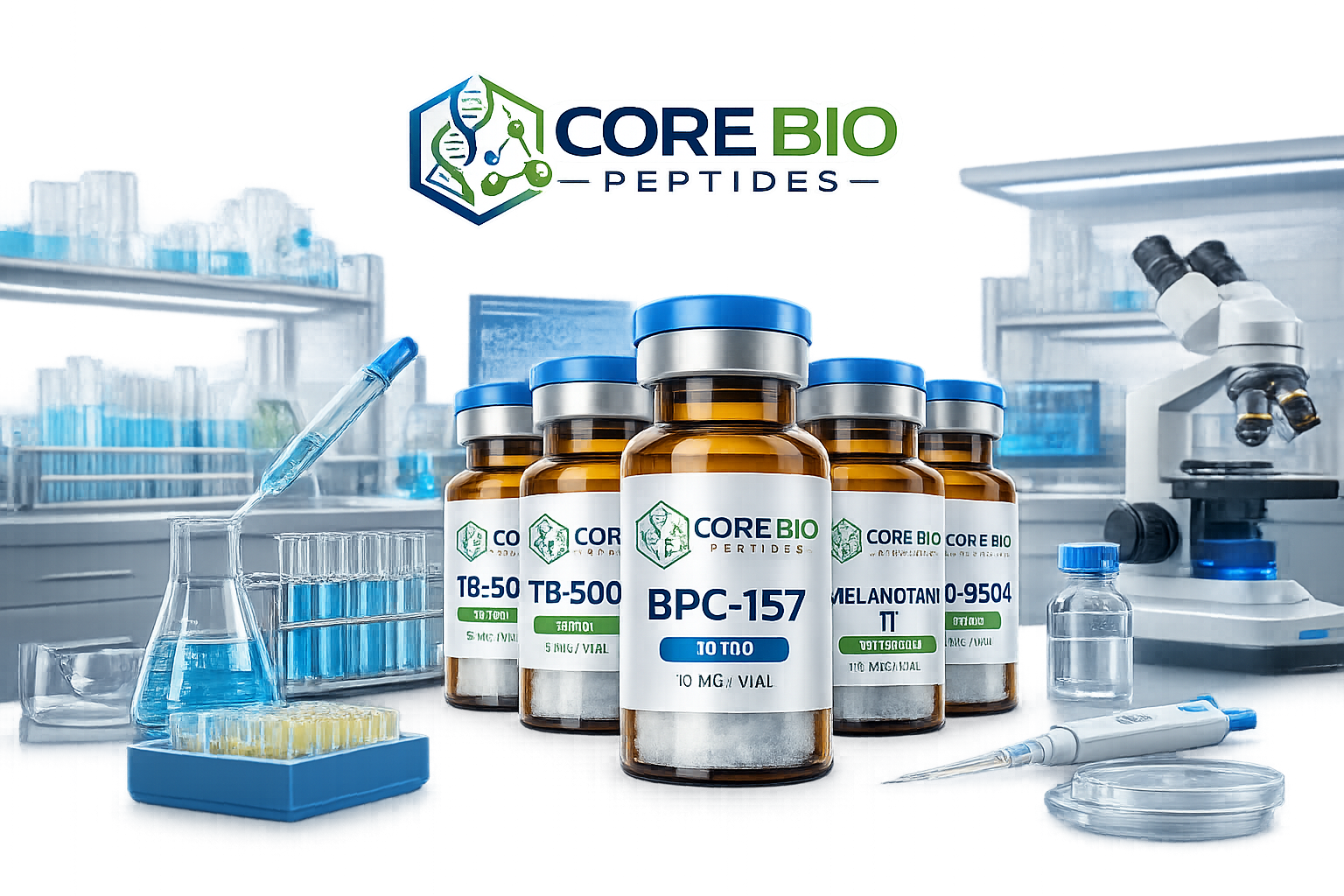
For peptides that are already reconstituted, storage changes: most require -20 °C or lower, but some need -80 °C. Always follow the supplier’s specific recommendations. Never store reconstituted peptides in a refrigerator’s main compartment, where the temperature fluctuates and moisture is high.
Step 3: Control moisture exposure before and after opening
Lyophilized peptides are hygroscopic, they pull water from the air. Even brief exposure to ambient humidity can cause the powder to clump or degrade. Every time you open a vial, moisture rushes in. That is why many suppliers include a desiccant capsule in the container. If the capsule has changed colour (indicating saturation), replace it or move the peptide to a fresh container with active desiccant.
Work quickly. Open the vial, remove the amount needed, and reseal it within seconds. If the lab environment is humid (above 50% relative humidity), consider working inside a glove box purged with dry nitrogen or argon. That may sound excessive, but for long-term projects where consistency matters, it prevents a slow drift in peptide quality that is hard to detect until results become erratic.
For peptides prepared for laboratory handling, the same caution applies: once a peptide is reconstituted and aliquoted, each aliquot should be used once and never re-frozen. Repeated freeze-thaw cycles introduce moisture and cause peptide aggregation. The rule is simple: single-use aliquots only.
Step 4: Protect from light
Many peptides are light-sensitive, especially those containing tryptophan, tyrosine, or cysteine residues. Even ambient fluorescent lighting can drive photodegradation over weeks. The solution is straightforward: store peptides in amber or opaque vials, or wrap clear vials in aluminium foil. If the supplier ships the peptide in a clear vial, transfer the powder to a light-protective container after reconstitution, or keep the entire vial inside a light-tight box inside the freezer.
Do not rely on the freezer light being off most of the time. Every time you open the freezer, light floods in. A simple cardboard box or a dedicated light-blocking storage rack prevents cumulative exposure.
Step 5: Handle reconstitution with care
When it is time to reconstitute a lyophilized peptide, the solvent and technique matter. Use sterile, endotoxin-free water or the buffer recommended by the supplier. Avoid vortexing, which can cause foaming and shear degradation. Instead, swirl gently or invert the vial a few times. If the peptide is difficult to dissolve, warm it to room temperature (briefly) and let it sit, but never heat it above 40 °C.

Reconstitute only the amount you plan to use within the next few days. Do not reconstitute the entire vial and then try to store the unused portion. The solvent introduces water and potential microbial contamination, and even a sterile vial is not a perfect barrier once opened. The practice of making small aliquots at the time of reconstitution is standard for a reason: it protects the bulk material from repeated handling.
Step 6: Label everything clearly and log the history
A well-organised lab labels each vial with the peptide name, concentration (if reconstituted), date of receipt, date of first opening, and the freeze-thaw count. This seems obvious, but in busy labs vials get mixed up. A simple log sheet taped to the freezer door or a digital spreadsheet shared among team members saves time and prevents mistakes.
Include the lot number from the supplier. If a batch later shows unexpected results, that lot number lets you trace the issue back to the original synthesis and shipping records. The few minutes spent labelling can save weeks of troubleshooting later.
Step 7: Plan for long-term storage with backup
For valuable or irreplaceable peptides, consider splitting the stock into two locations: one set of aliquots in the primary freezer, and a backup set in a different freezer (or even a different building). A freezer failure is rare, but when it happens, the loss of a year’s worth of research material is devastating. A simple backup plan costs almost nothing compared to the time and expense of re-synthesis.
For peptides prepared for laboratory handling, the same backup principle applies: never keep all your material in one vial. Even if you are certain you will use it within a month, a single accident (dropping the vial, a cap that does not seal properly) can end the experiment. Divide the lyophilized powder into smaller, labelled vials before you store them.
What to watch for over time
Degradation is not always visible. A peptide that looks fine may have lost activity. If you notice any of the following, it is time to re-assess your storage conditions:

- The powder changes colour or clumps together.
- Reconstitution takes longer than before or leaves visible particles.
- Experimental results become inconsistent or drift over weeks.
- The vial’s seal looks compromised or the desiccant has changed colour.
In each case, test a small amount before running a full experiment. A quick mass spectrometry check or a simple activity assay can confirm whether the peptide is still good. If it is not, discard the batch and start fresh. Trying to salvage a degraded peptide is rarely worth the risk to your data.
Final practical tips
Good storage habits become second nature with practice. Keep a designated storage area in the freezer for peptides only, away from biological samples that may leak or cross-contaminate. Use a permanent marker that does not smudge at low temperatures. And when in doubt, follow the supplier’s instructions, they have tested the stability of their product and know the optimal conditions.
Research peptide kits are only as good as the care they receive after opening. The extra attention paid to temperature, moisture, light, and handling rewards you with reproducible results and fewer wasted experiments. It is a small investment that protects a much larger investment in time and materials.
Corrections
Spot something wrong? Send it to the desk and it gets fixed in the open.